
When tariffs on Canadian and Mexican goods landed in early 2025, the instinctive response for many U.S. businesses and the aim of the government was simple: Source domestically to avoid the exposure. It made sense on paper, but in practice it hasn’t worked the way many companies expected.
The problem is that domestic suppliers are frequently importing tariff-exposed raw materials themselves. A U.S. manufacturer sourcing steel, electronics components or pharmaceutical ingredients from a domestic supplier is still, in many cases, absorbing the cost of upstream tariffs, just one step removed from the border. The result is a tariff burden that’s difficult to trace and harder to address than a straightforward duty on a specific imported good. You can switch suppliers but you can’t always switch away from the tariff.
Get in touch with a cross-border shipping expert
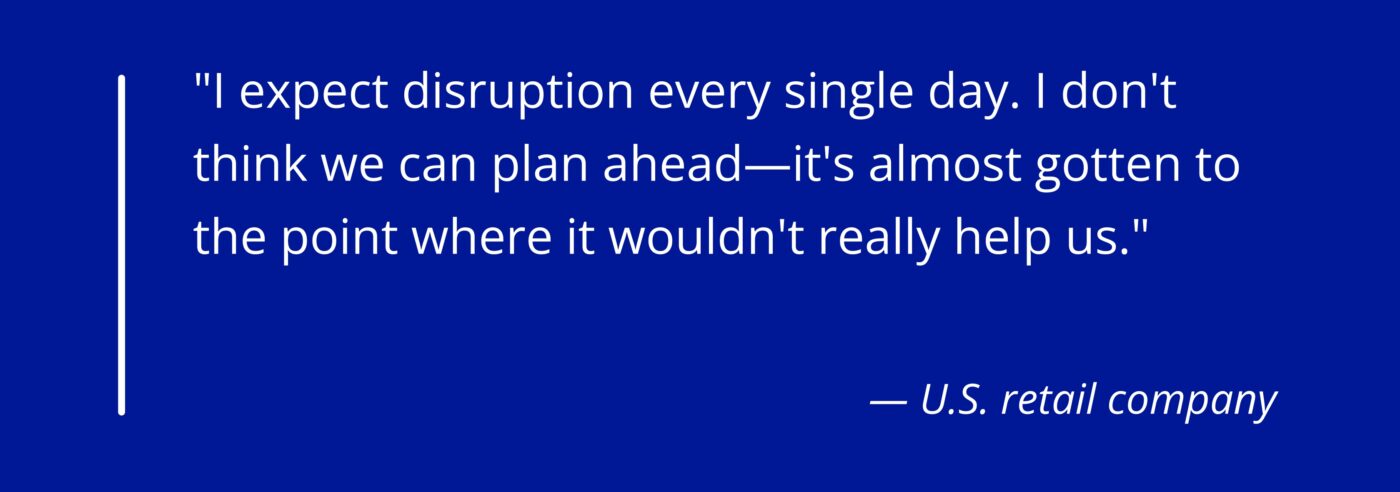
“I expect disruption every single day. I don’t think we can plan ahead—it’s almost gotten to the point where it wouldn’t really help us.” — U.S. retail company
In 2026, Purolator commissioned HelloInfo to survey 348 shipping and logistics decision-makers across industrial, retail, healthcare and technology sectors in the United States and Canada. Respondents were split equally between both countries. From the U.S. data, we learned that businesses south of the border are absorbing a tariff burden that’s more complicated than a “buy domestic” instinct predicted. Those businesses are increasingly turning to compliance investment as their primary tariff mitigation strategy, rather than restructuring U.S. supply chains.
This article digs into the U.S. tariff experience, how companies across all four sectors are responding and what every U.S. shipper needs to have in place before July’s CUSMA/USMCA review.
Read the full global trade report
Key takeaways
-
- Why the U.S. tariff experience differs from Canada and why buying domestic hasn’t been the fix many expected
- How U.S. companies are responding and why it looks different from Canada
- The CUSMA/USMCA review: U.S. optimism and where it may create blind spots
- What U.S. shippers need from their logistics partners
- What U.S. companies should do ahead of the USMCA review
- How Purolator supports U.S. shippers
Why the U.S. tariff experience differs from Canada and why buying domestic hasn’t been the fix many expected
The U.S. tariff experience is fundamentally different from what businesses north of the border are going through. For Canadian businesses, U.S. tariffs on goods imported from Canada reduce the competitiveness of Canadian exports in the U.S. market, while Canada’s dependence on the U.S. as its dominant trading partner makes diversifying away from that exposure easier said than done. U.S. companies, on the other hand, face a largely unidirectional burden: rising import costs without the same market dependency risk that makes the Canadian situation so acute.
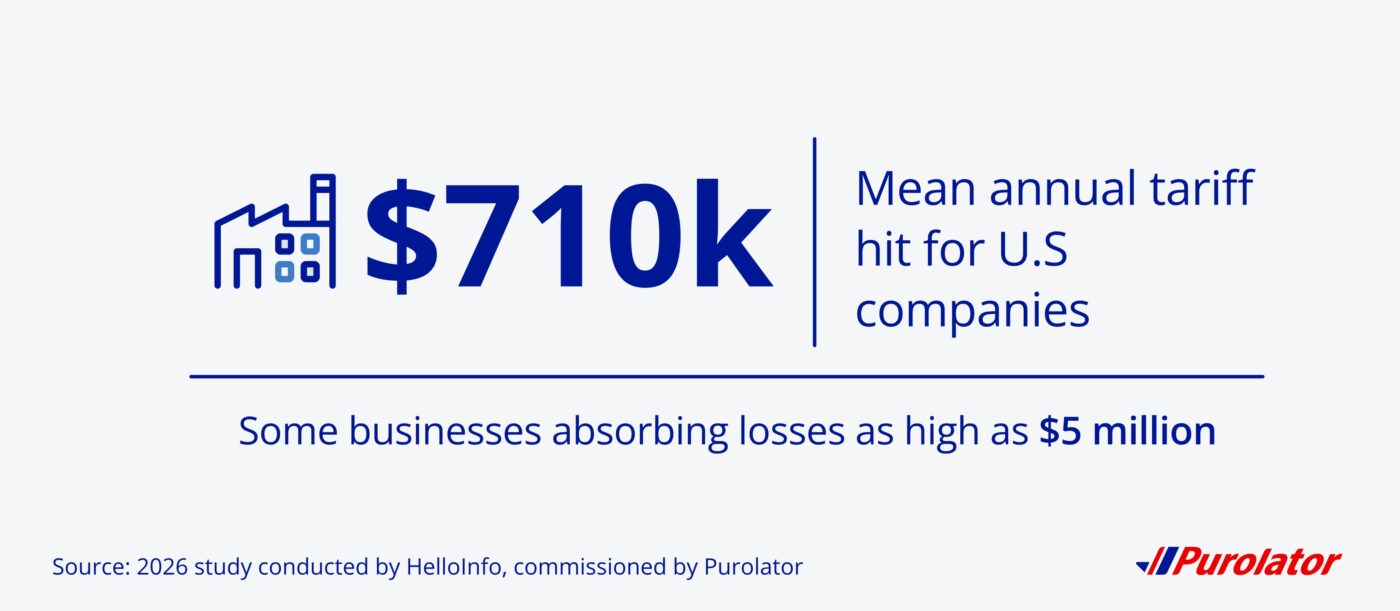
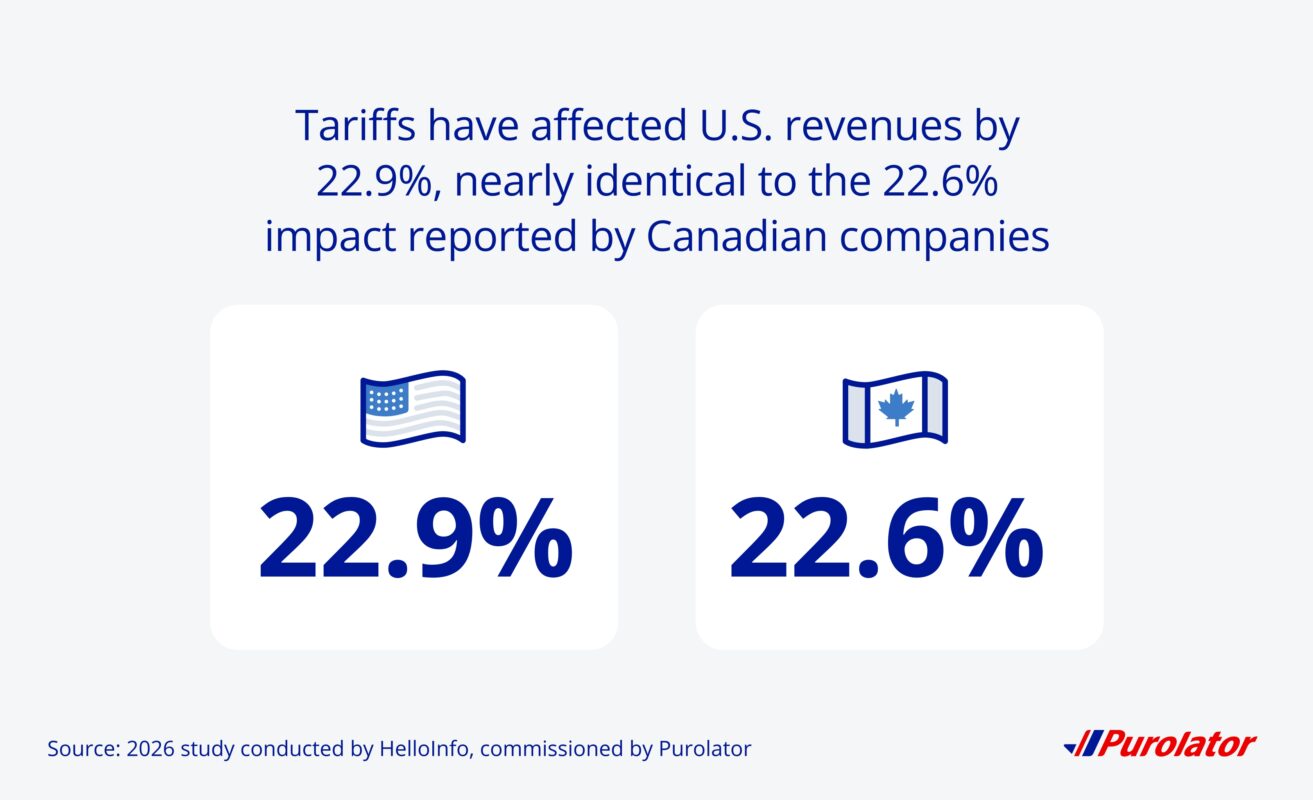
But unidirectional doesn’t mean easy. U.S. companies report a mean annual tariff hit of $710,000 USD, with some businesses reporting losses as high as $5 million. Tariffs have affected U.S. revenues by 22.9 cents on the dollar, which is nearly identical to the 22.6% impact reported by Canadian companies. The dollar figures are slightly higher for U.S. respondents due to larger average company sizes and broader global sourcing footprints rather than a significantly different level of exposure.
See how companies north of the border are responding to tariff changes
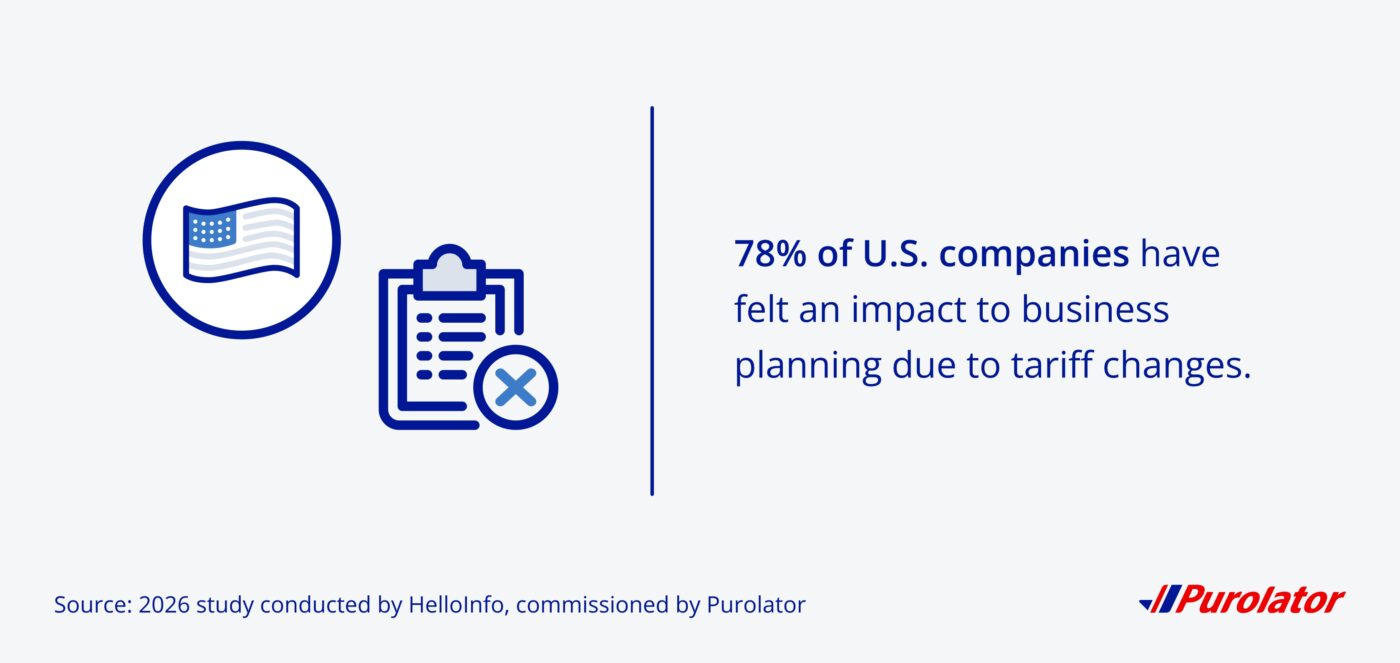
Seventy-eight percent of U.S. respondents have felt an impact on business planning as a result of U.S. tariffs, with 22% reporting a significant impact and 56% reporting a moderate impact. As for where they’re feeling it most, tariff costs are ranked as the top concern by 41% of respondents, followed by overall shipping cost increases at 15%.
On the customer loss front, rates are lower in the U.S. than in Canada across every sector but still significant at 44% vs. 61% respectively. U.S. industrial companies have lost the most customers for U.S. segments, while retail has lost the most on the Canadian side.
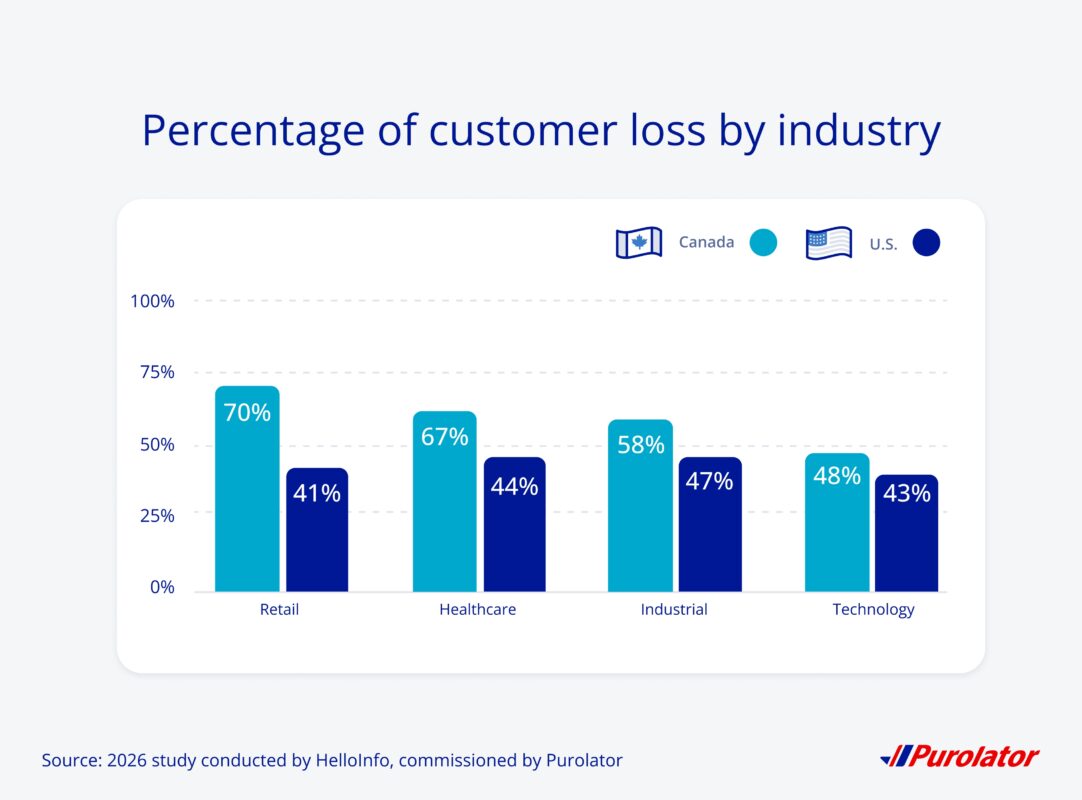
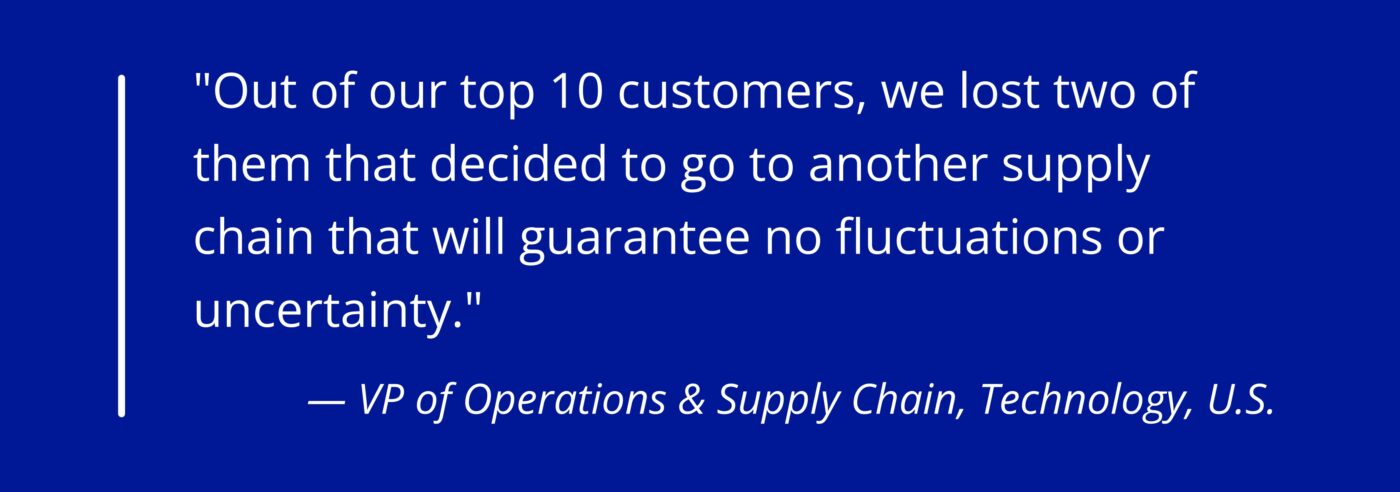
Tracking the true cost of tariffs isn’t straightforward for businesses on either side of the border. When components cross the border multiple times before reaching final assembly—as they do in automotive and other integrated manufacturing sectors—tariff costs can hit multiple points in the supply chain, making the full exposure difficult to quantify. U.S. companies that shifted to domestic suppliers to reduce that complexity have often found those suppliers are absorbing their own tariff-exposed input costs and passing them through at higher prices. This burden has affected companies in both countries.
Read the full global trade report
How U.S. companies are responding and why it looks different from Canada
The largest behavioural difference between U.S. and Canadian companies in this research is the nature of their response to tariff uncertainty. U.S. companies are predominantly absorbing costs and investing in the compliance infrastructure that reduces tariff exposure within existing supply chains. Canadian companies, meanwhile, are restructuring by eliminating products, exiting markets, moving manufacturing and systematically reducing U.S. dependency.
No U.S. companies plan to exit the Canadian market, while 11 Canadian companies that participated in the research plan to exit the U.S. market entirely in the next 18 months. Rather than abandoning their long-standing trading relationships, U.S. companies are working to make those relationships less expensive to maintain.
Learn more about the impact of tariffs on cross-border relationships
Across every sector, U.S. companies are investing in strategic customs practices at higher rates than their Canadian peers. That investment—which includes free trade agreement optimization, HTS reclassification, duty drawback programs, tariff engineering and the use of foreign trade zones and bonded warehouses—is the primary avenue for U.S. companies to reduce their tariff burden without dismantling the supply chains they’ve spent years building.
Industrial: absorbing costs and investing in compliance
In general, U.S. industrial companies are absorbing costs instead of making structural exits. They’re directing that energy into compliance investment: 56% have invested in strategic customs practices, compared to 40% of Canadian industrial peers. U.S. industrial companies are also more likely to invest in compliance in the next 18 months, suggesting this has become a strategic long-term play rather than a one-time response.
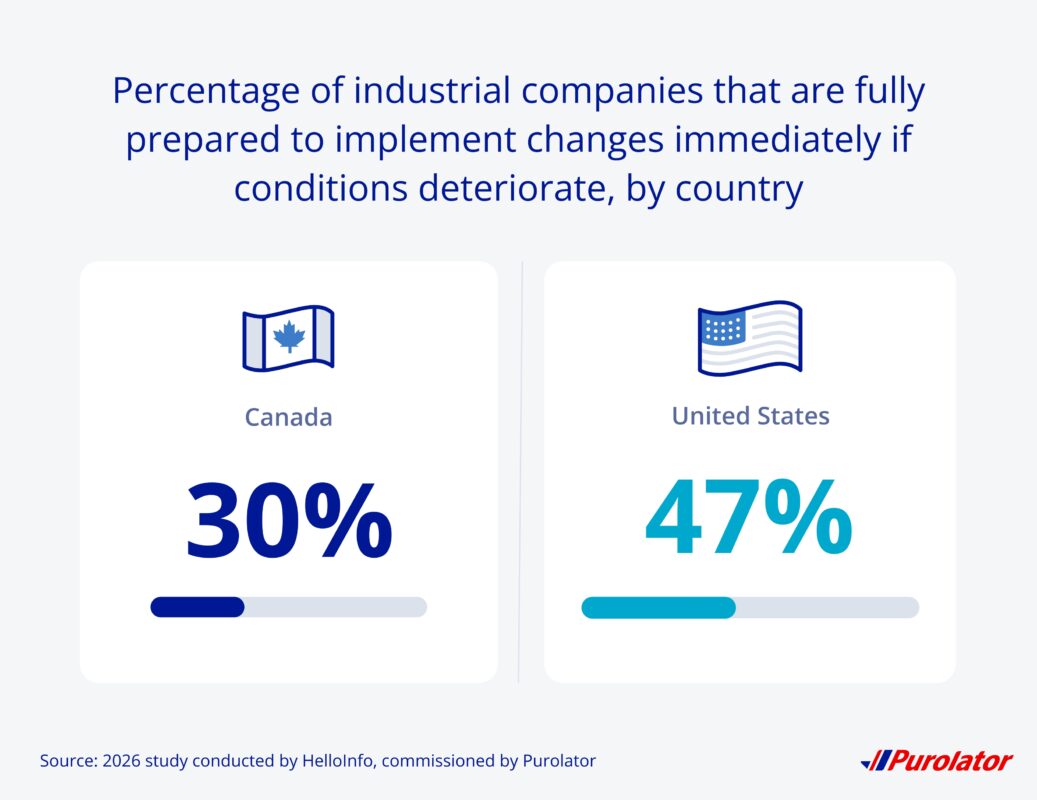
Heading into the CUSMA/USMCA review, 47% of U.S. industrial companies say they’re fully prepared to make changes immediately if required. That’s a significant advantage over the 30% of Canadian industrial companies who say the same. However, despite losing fewer customers than their Canadian industrial peers, U.S. companies are still concerned about the long-term implications of tariffs. 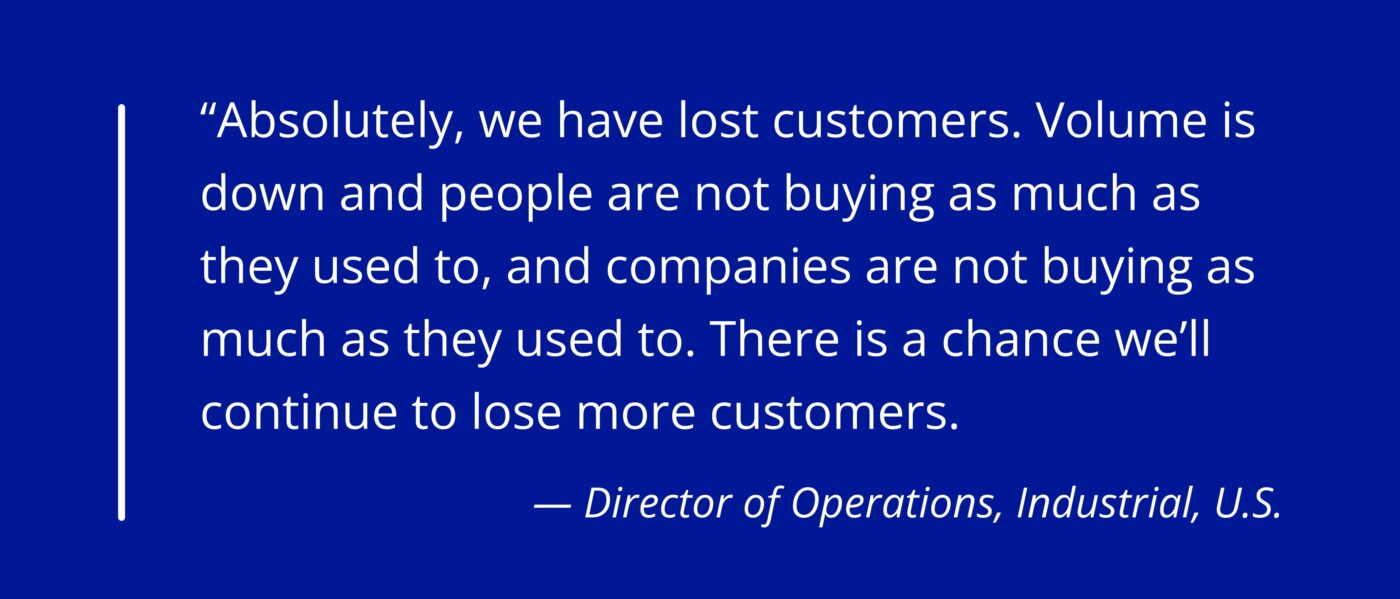
Learn more about the impact of tariffs on industrial companies
Retail: compliance investment in response to the end of de minimis
The end of the de minimis exemption hit cross-border e-commerce volumes hard on both sides of the border. But U.S. retailers have a buffer that Canadian companies don’t: a large domestic market that doesn’t require cross-border shipments to reach. That could be why U.S. retail companies lead supplier changes (55% vs. 48% Canada) and distribution center relocations (34% vs. 24%). They’re using sourcing pivots to reduce direct tariff exposure.
Like the industrial sector, U.S. retail companies are also ahead of those in Canada on strategic customs investment: 45% of U.S. retail companies plan to invest in strategic customs practices in the next 18 months, compared to just 24% of Canadian retail companies. U.S. retailers are increasingly using compliance infrastructure to reduce the cost of cross-border operations without having to invest in new distribution facilities.
Learn more about the impact of tariffs on retail companies
Healthcare: the most insulated and the most optimistic
U.S. healthcare companies report lower concern levels than industrial and retail peers, and domestic-heavy supply chains have provided some insulation from the tariff pressure hitting other sectors. But healthcare sourcing extends well beyond North America, making those protections irrelevant for many goods.
The pharmaceutical sector also now faces a Section 232 investigation into pharmaceutical imports, with potential tariffs of up to 100% on patented pharmaceuticals and active pharmaceutical ingredients. For healthcare companies with significant pharmaceutical supply chains outside North America, the period ahead may look very different from the relative stability of the past 18 months.
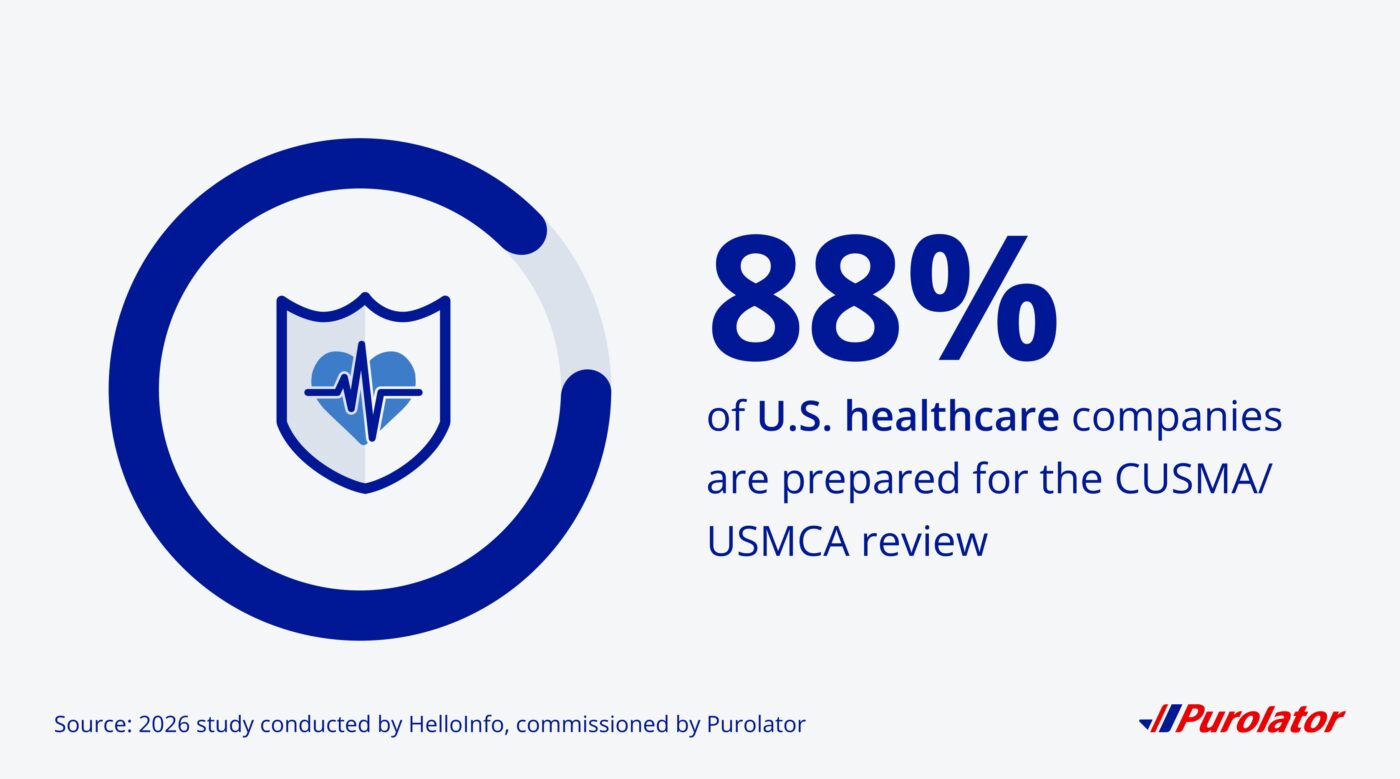
However, U.S. healthcare companies are the most prepared industry for the CUSMA/USMCA review at 88% and among the most optimistic about its outcome. This reflects confidence in the trading relationship rather than immunity from its risks. For healthcare importers with North American supply chains, a stable or strengthened CUSMA/USMCA framework supports continued duty-free access. For those sourcing outside North America, the review is one factor among several that will shape their cost structure over the next 16 years.
Learn more about the impact of tariffs on healthcare companies
Technology: the leader in compliance
U.S. technology companies are the furthest ahead on compliance investment of any U.S. sector. Fifty-seven percent have already invested in strategic customs practices and the same rate is planned for the next 18 months. That’s likely due to the same limitations their Canadian peers are up against. Technology manufacturing is concentrated in Asia, making it harder to restructure supply chains quickly.
Many U.S. technology companies are instead focused on what they can do now. They’re the most prepared sector for the CUSMA/USMCA review at 90% and half are fully prepared to act immediately if things get worse (vs. 39% for Canadian technology companies). However, Canadian firms are more likely to require only minimal planning to act (27% vs. 18% for U.S.), which helps level the field.
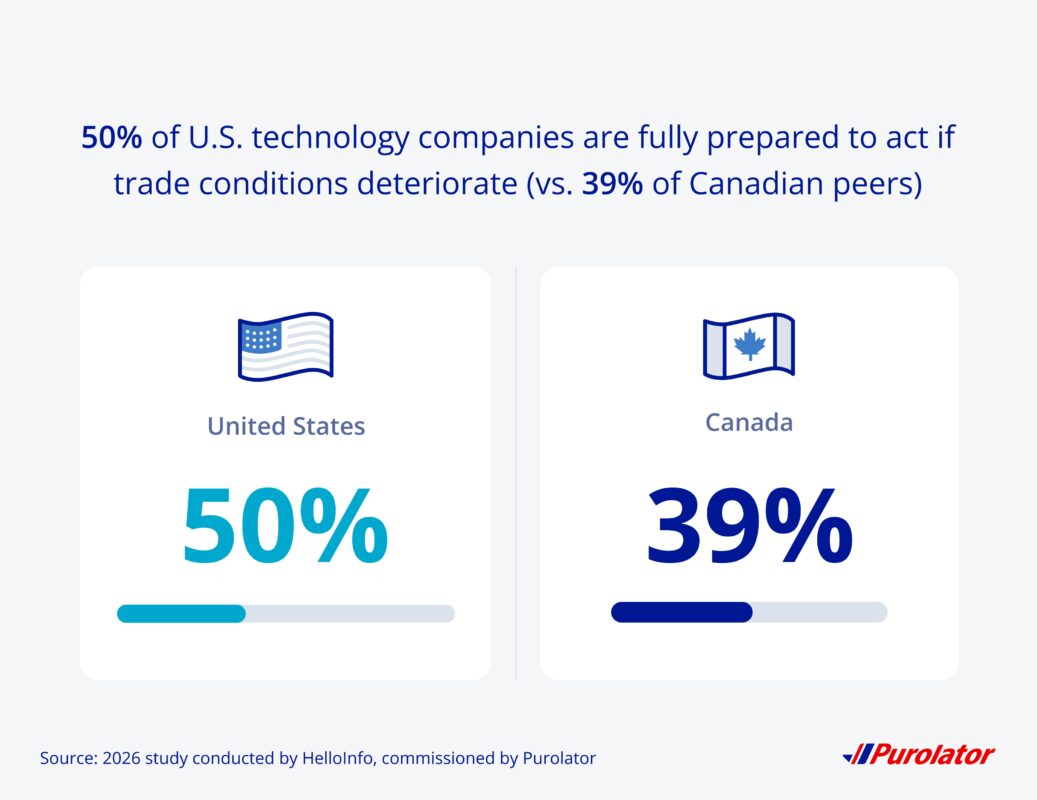
Many U.S. technology companies are instead focused on what they can do now. They’re the most prepared sector for the CUSMA/USMCA review at 90% and half are fully prepared to act immediately if things get worse (vs. 39% for Canadian technology companies). However, Canadian firms are more likely to require only minimal planning to act (27% vs. 18% for U.S.), which helps level the field.
Learn more about the impact of tariffs on technology companies
The CUSMA/USMCA review: U.S. optimism and where it may create blind spots
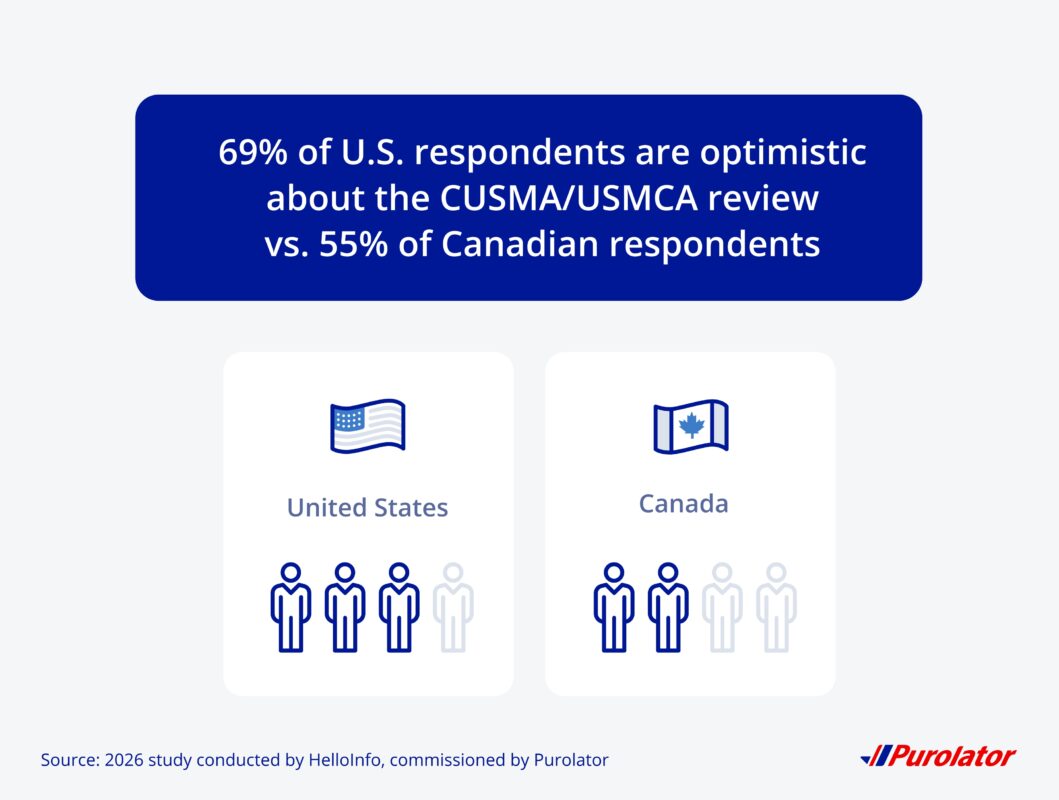
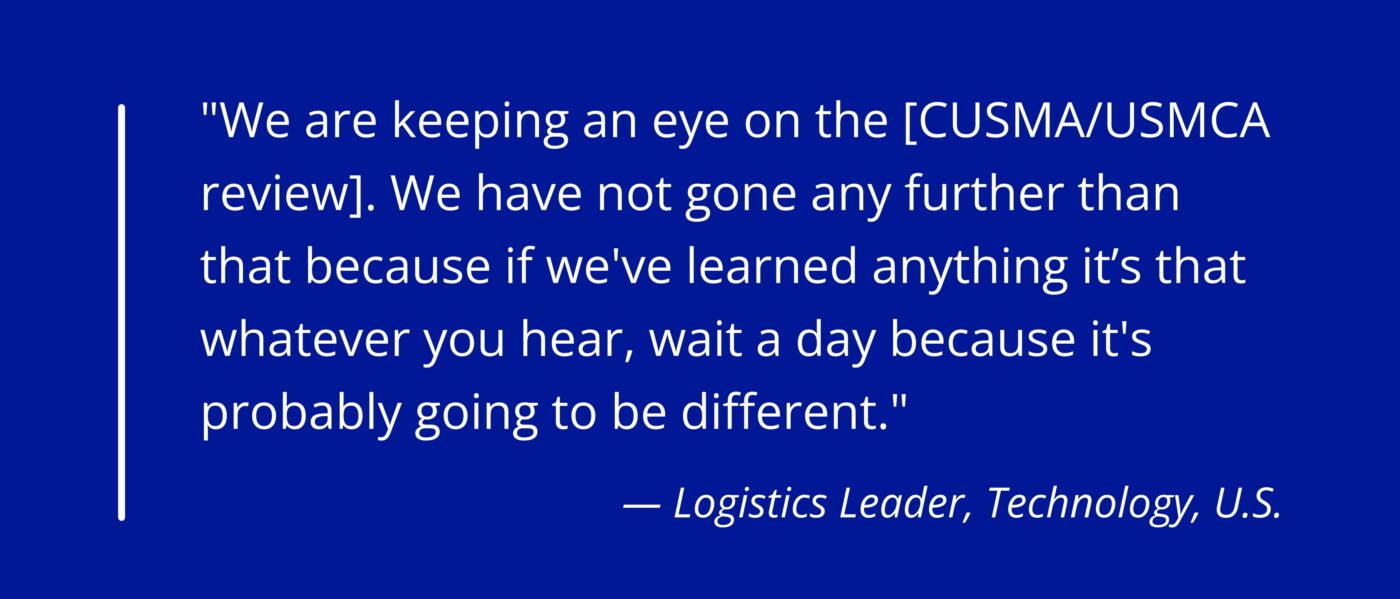
U.S. and Canadian businesses are heading into the CUSMA/USMCA review with significantly different mindsets. In the U.S., companies are less aware of the review (68% vs. 73% for Canada) but those who are aware are more optimistic about the outcome than their Canadian peers (69% vs. 55%). Companies on both sides appear to understand what’s at stake and who holds the leverage.
Get guidance on the upcoming CUSMA/USMCA review. Partner with us
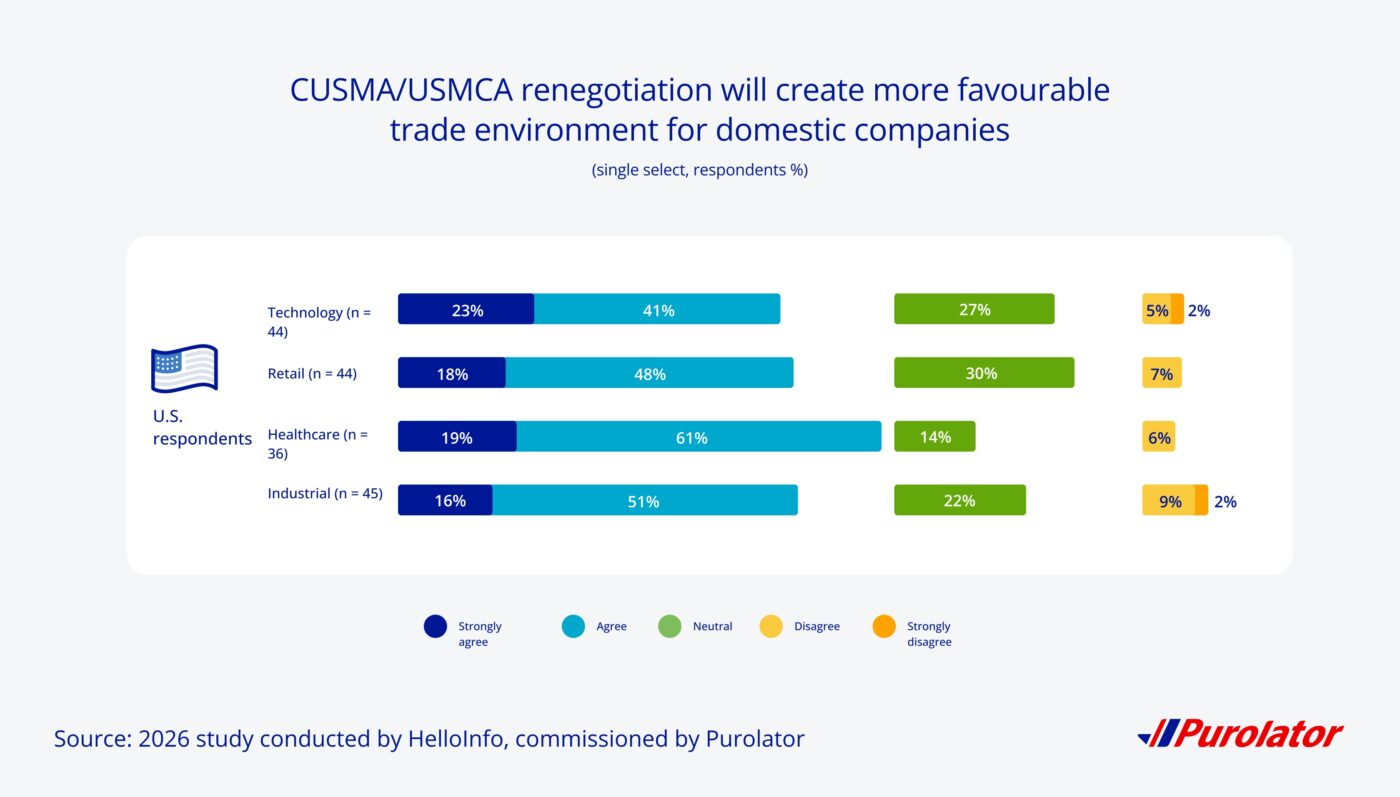
U.S. healthcare is the most optimistic, with 80% of respondents agreeing or strongly agreeing that the review will create a more favourable environment. Technology follows at 66%. U.S. industrial companies are more wary, likely because their exposure is broader and they’ve had a tougher journey in the past 18 months, but they’re still more optimistic than Canadian industrial peers.
But optimism can create its own kind of risk. Companies that sit back and wait could have the most ground to cover following the review. Regardless of a favourable or unfavourable outcome, the review will bring a period of interpretation, implementation and adjustment. So the best tactic for companies across industries in both countries is to model best- and worst-case scenarios now so they’re ready to take action when the time comes.
Likewise, a negative outcome for Canada doesn’t translate to a positive outcome for the U.S., particularly for those with Canadian supplier relationships or cross-border distribution. They need to consider the downstream effects of what the CUSMA/USMCA review will mean for U.S. supply chains that depend on Canadian inputs or route goods through Canada.
Read the full global trade report
What U.S. shippers need from their logistics partners
In the U.S., healthcare respondents are among the most confident about the review outcome: 80% think USMCA will improve trade in their country. U.S. healthcare also leads in preparedness at 88%. This may reflect the strength of the domestic healthcare supply chain that insulates U.S. companies from a negative outcome.
Canadian healthcare companies worry their U.S. peers hold the leverage
The Canadian healthcare picture is more nuanced than simple pessimism. About a third (35%) are neutral on whether the CUSMA/USMCA renegotiation will protect Canadian goods from future U.S. tariffs, while 48% agree or strongly agree and only 6% disagree or strongly disagree.
Discover how Purolator supports healthcare shippers
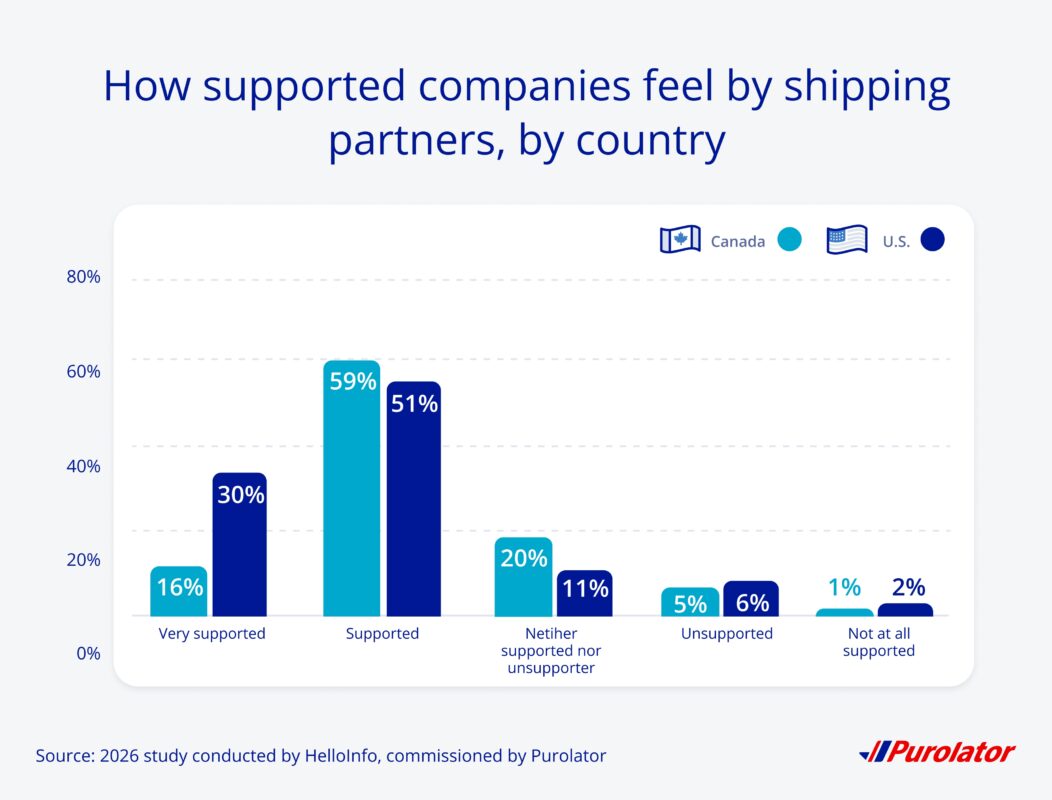
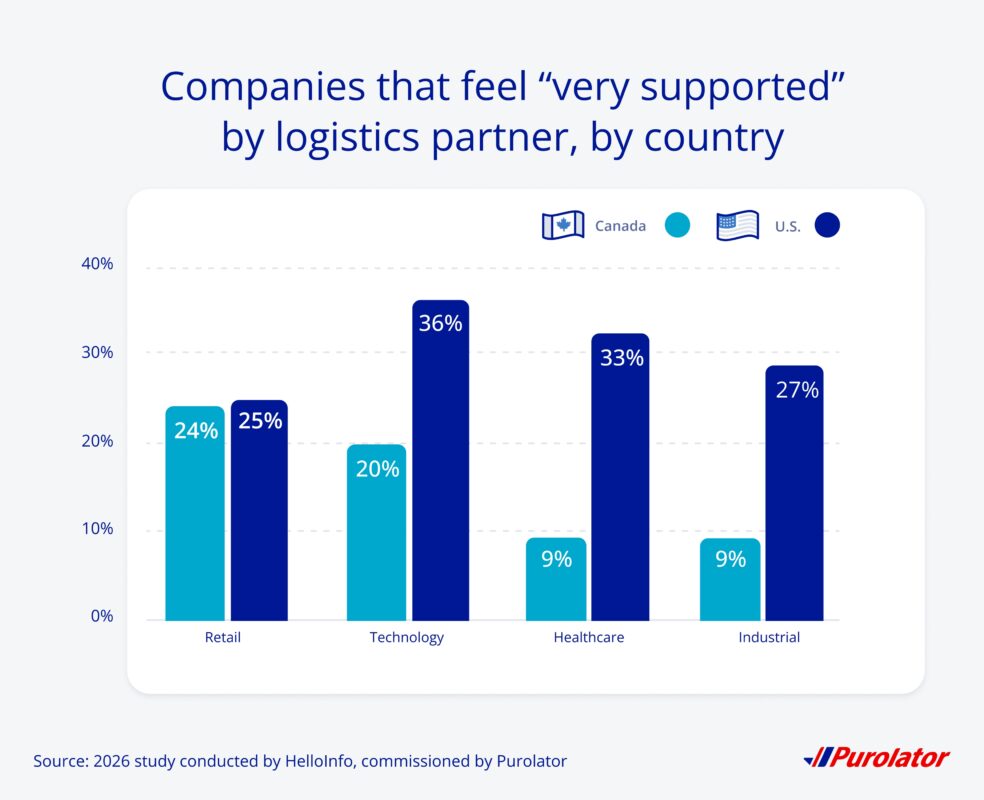
U.S. companies across industries are leaning on cross-border logistics and shipping partners to navigate the changing tariff situation, and most are getting the help they need. In the U.S., 81% of companies describe themselves as “very supported” or “supported” (vs. 75% of Canadian peers), while only 8% feel actively unsupported (vs. 6% in Canada). For those who feel “very supported,” technology companies lead at 36%, followed by healthcare (33%), industrial (27%) and retail (25%).
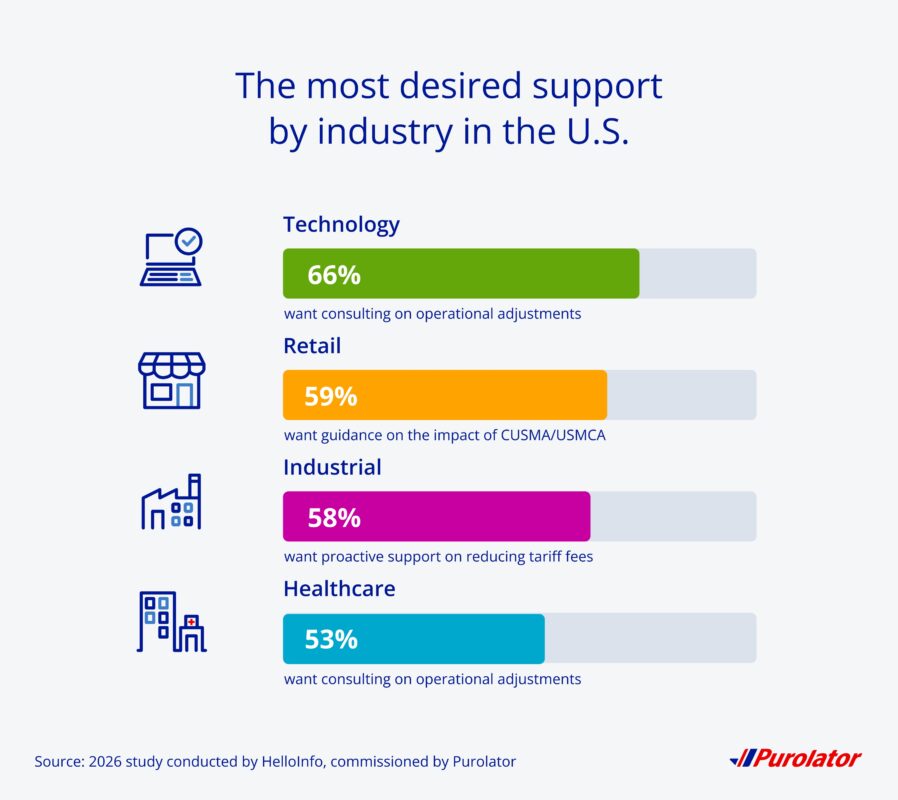
However, gaps exist and U.S. companies know exactly where they need more hands-on support. The most desired support by industry includes:
Discover tariff relief and global market opportunities
U.S. companies also say their shipping partners didn’t provide the level of support they needed during peak tariff volatility, which is similar to their Canadian peers. Among the most common frustrations are slow communication, inconsistent guidance and reactive rather than proactive support.
Purolator is built to close exactly these gaps for U.S. companies shipping across the Canada-U.S. border. With Purolator’s dedicated cross-border network and trade compliance expertise through Livingston International, U.S. shippers can get tariff exposure analysis, CUSMA/USMCA certification support and a single point of contact who provides proactive guidance before something goes wrong, not after. And when it comes to trust, Purolator’s track record speaks for itself: Named the most reputable shipping company in Canada by the 2026 Leger Reputation Study, Purolator brings the credibility and cross-border depth that U.S. shippers need from a Canadian logistics partner right now.
Partner with a cross-border logistics expert
What U.S. companies should do ahead of the USMCA review
Despite their different levels of exposure, the July review is a pivotal moment for companies in the U.S. and Canada. Canada invariably holds less leverage but that doesn’t mean U.S. shippers should remain passive in their response. Now is the time to be proactive and make plans that will enable agile shifts if and when they’re needed.
- Between now and July, the highest-ROI move for most U.S. companies is to map their upstream tariff exposure, on both direct imports and through domestic suppliers that are also absorbing tariff costs. U.S. companies with Canadian supplier relationships should audit their CUSMA/USMCA certification coverage before the review changes the rules.
- In the next 90 days, model all scenarios, including the least likely ones. A favourable review outcome could still require operational pivots, while an unfavourable one for Canada might flow into U.S. supply chains faster than most U.S. companies expect. Building those models now gives companies an advantage over those that wait until after the announcement.
- Beyond the review, U.S. companies should continue their compliance investment. In addition, duty drawback identification, HTS reclassification, free trade zone optimization and CUSMA/USMCA certification infrastructure all deliver direct duty savings that compound over time. The companies that invest in proper compliance will be better equipped to handle the next Canada-U.S. trade policy shift with the least disruption.
Unsure where to start? Speak with a customs expert
How Purolator supports U.S. shippers
For U.S. companies navigating cross-border complexity with Canada and Mexico, Purolator brings more than 25 years of cross-border shipping experience and over 65 years of expertise operating in Canada and across all three countries. Combined with our acquisition of Livingston International, North America’s leading customs brokerage and trade management firm, we have the expertise to help U.S. shippers across industries navigate an uncertain Canada-U.S. trade environment.
For upstream tariff exposure and customs optimization
Purolator’s U.S. trade compliance specialists and Livingston International’s 2,700+ trade experts help U.S. shippers trace their full tariff exposure. Through effective classification, free trade optimization, trade management and duty drawback identification, Livingston can help U.S. businesses unearth cost-saving opportunities while also providing critical trade compliance support. The Purolator Trade Assistant provides on-demand tariff classification codes, duty estimates and customs documentation requirements for U.S. teams auditing their cross-border exposure.
Learn more about the impact of tariffs on U.S. and Canadian industries in our global tariff report. Download now
For CUSMA/USMCA certification and review preparation
For U.S. companies with Canadian suppliers or cross-border distribution, CUSMA/USMCA certification is a direct tool for reducing duty costs. Purolator and Livingston host tariff-focused webinars that provide U.S. shippers with current guidance on how the review may affect specific product categories and supply chain structures, so companies can start planning ahead.
For international shipping between the U.S., Canada and Mexico
Purolator’s integrated North American network covers the U.S., Canada and Mexico with less-than-truckload (LTL) and truckload (TL) freight options, end-to-end customs support and 55+ border entry points. For U.S. companies evaluating how a post-review trade environment affects their cross-border operations, Purolator supports the full North American logistics strategy and the compliance requirements that come with it.
Discover how Purolator supports supply chains across North America and Mexico
For northbound shipments into Canada
In the U.S., Purolator has the advantage of using a non-asset-based network to be more nimble and flexible with the varying needs of U.S. and international supply chains. North of the border, our Canadian network is 97% owned assets, providing exceptional last-mile delivery with fewer hand-offs, greater visibility and control, and an on-time performance rate of 98% or above. As one of the largest networks in Canada, Purolator delivers to 100% of Canadian postal codes, operates in the U.S. and has many partnerships across Asia-Pacific, Europe, Australia and additional shipping lanes.
For shipments within the U.S.
As a cross-border and domestic shipping leader, Purolator offers fast, reliable service and trusted customer support to support your domestic shipping within the U.S.
For ongoing customer support
Mid-size to enterprise customers are assigned a dedicated representative with full insight into their account, while smaller businesses get direct access to our customer care team. This provides the single point of escalation when U.S. trade conditions change, so companies always know who to contact.
While not as directly affected as those north of the border, U.S. companies aren’t immune to the impact of tariff changes. The CUSMA/USMCA review will inevitably spark more operational changes across industries in the U.S. and Purolator is here to help. Download the full research report to understand how businesses across industries in the U.S. and Canada are navigating tariff uncertainty today and after the review.
*Purolator is Canada’s most reputable delivery brand in Canada, according to the 2026 Leger Reputation Study.
**This research was commissioned (paid for) by Purolator and conducted by HelloInfo, an independent research firm. Purolator was not identified as the sponsor during data collection.